

Terrifying WW3 warning with Russia and US on brink of ‘unconstrained nuclear arms race’ | World | News

The stage is set for a new nuclear arms race (Image: Getty)
The last remaining nuclear arms control treaty between Russia and the United States is set to expire on Thursday, raising fears the world is heading towards its most dangerous standoff in decades. The collapse of the New START Treaty would, for the first time in more than half a century, remove all limits on the size of the two biggest nuclear arsenals on the planet—a moment arms control experts warn could unleash an unconstrained and destabilising arms race.
Russian President Vladimir Putin has said Moscow is ready to continue abiding by the treaty’s limits for another year if Washington does the same. US President Donald Trump, however, has so far refused to commit, saying he wants any future deal to include China.
Read more: CNN paused for breaking Trump alert as president loses it completely
Read more: Panic for Putin as EU moves to stop all Russian gas imports – £13bn lost

New START was signed by Barack Obama and Dmitry Medvedev in 2010 (Image: Getty)
A White House official said Mr Trump wants to keep limits on nuclear weapons but also bring Beijing to the table, adding the president would decide “on his own timeline”. China has repeatedly rejected any restrictions, arguing its nuclear stockpile is far smaller than those of the US and Russia, even as it continues to expand.
Kremlin spokesman Dmitry Peskov warned this week that the world would become “more dangerous” without caps on American and Russian nuclear stockpiles. Arms control advocates agree, saying the treaty’s expiry could fuel global instability and sharply increase the risk of nuclear conflict.
Daryl Kimball, executive director of the Arms Control Association, said the end of New START would allow both sides to boost deployed nuclear weapons for the first time in around 35 years: “We’re at the point now where the two sides could, with the expiration of this treaty, increase the number of nuclear weapons that are deployed on each side. This would open up the possibility of an unconstrained, dangerous three-way arms race, not just between the US and Russia, but also involving China.”
Kingston Reif of the RAND Corporation, a former senior Pentagon official, warned the loss of the treaty’s predictability could push both sides to plan for worst-case scenarios. Mr Reif said countries may feel incentivised to expand their arsenals to show toughness or gain negotiating leverage.

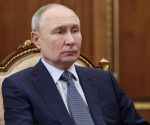
Russian President Vladimir Putin (Image: Getty)
The warnings come against the backdrop of heightened nuclear rhetoric from Moscow since Russia’s full-scale invasion of Ukraine in February 2022. Putin has repeatedly referenced Russia’s nuclear capability, and in 2024 signed a revised nuclear doctrine lowering the threshold for the use of nuclear weapons.
The original START treaty was ratified in 1991. New START, signed in 2010 by Barack Obama and then Russian president Dmitry Medvedev, limited each side to 1,550 deployed nuclear warheads on no more than 700 missiles and bombers. It was extended in 2021 for five years, but inspections were halted during the Covid pandemic and never resumed.
In February 2023, Putin suspended Russia’s participation in inspections, citing US support for Ukraine, while insisting Moscow would continue to respect the treaty’s limits. Last September, he offered to stick to those caps for another year to allow time to negotiate a replacement, warning that the treaty’s expiration would be destabilising and could spur nuclear proliferation.
Rose Gottemoeller, the chief US negotiator of the pact, said a short extension would have served American interests and would not have undermined efforts to respond to China’s nuclear build-up. Ms Gottemoeller noted the strategic value of the treaty.
The looming collapse of New START follows the breakdown of earlier arms control agreements, including the INF Treaty in 2019 and the US withdrawal from the Anti-Ballistic Missile Treaty in 2001. Russia has long argued that US missile defence systems threaten its nuclear deterrent, prompting the development of new weapons such as the Poseidon nuclear-powered underwater drone and the Burevestnik nuclear-powered cruise missile.
Tensions have been further inflamed by Mr Trump’s proposed “Golden Dome” missile defence system, which Moscow says could trigger a new arms race. Mr Kimball warned Russia and China are likely to respond by building more offensive weapons, which are cheaper and faster to produce than defensive systems.
Fears have also been raised by Mr Trump’s remarks last year about potentially resuming US nuclear testing, something Putin said Russia would match if it happened.
Mr Kimball said the world is entering a far more dangerous phase of strategic competition: “This marks a potential turning point into a much more dangerous period of global nuclear competition, the likes of which we’ve not seen in our lifetimes.”