

Brilliant story behind Ryan Gosling’s new hit movie, Project Hail Mary | Films | Entertainment

Ryan Gosling stars in Project Hail Mary based on Andy Weir’s bestseller (Image: AP / Amazon MGM Studios)
- First published in Daily Express on May 8, 2021.
Science-Fiction writer Andy Weir, whose debut novel The Martian sold five million copies and became a hit movie starring Matt Damon, is trying to explain particle physics to me when he breaks into song: “Just remember that you’re standing on a planet that’s evolving, and revolving at 900 miles an hour, that’s orbiting at 19 miles a second, so it’s reckoned, a sun that is the source of all our power…”
It’s not that Weir’s own explanation of the universe as an ever-inflating balloon with a diameter of 93 billion light years is hard to follow – it is, despite his best efforts. It’s that channelling Eric Idle from Monty Python’s iconic Meaning Of Life movie is actually the perfect way of summing up his brilliantly entertaining, humorous and meticulously-researched books. Indeed, Weir has been at the forefront of bringing the traditionally niche genre of sci-fi to a mainstream audience in recent years.
“It’s one thing to read a murder mystery and think, ‘This could happen and here’s this clever detective’, it’s another thing to have a fantastical world,” he explains. “It takes a little more suspension of disbelief to enjoy science fiction and fantasy.” Now the self-proclaimed science geek has revisited his best-selling mix of physics, maths, chemistry and seat-of-your pants adventure for a new novel, Project Hail Mary, coming to the big screen next Thursday (March 19) starring Ryan Gosling.

Weir at NASA’s Johnson Space Center (Image: Courtesy James Blair / NASA)
It’s a “what-if” thriller based around the premise the sun is dimming, putting life on earth at risk of extinction. Despite the existential threat to humanity imagined by Weir, it’s gloriously optimistic, darkly humorous and packed to the brim with real science.
Weir, who grew up reading Isaac Asimov, Robert Heinlein and Arthur C Clarke, does not believe the future is the dystopian, fascist dictatorship envisioned by many writers. “Usually sci-fi is action or thriller, that’s what it’s come to be known as,” says the likeable 53-year-old from the home he shares with wife Keri, their dog, Cocoa, and cats, JoJo and Demi, in Saratoga, California.
“I do feel like sci-fi has been hijacked by these stories about bleak, fascist dystopias of the future and only teenagers doing weird s*** can save the day. You don’t have to explain a lot to the reader, they immediately get that concept. I’m an optimist, a bit of a Pollyanna even, but it seems clear the future is always better than the past. If you look at earth’s history, we’re constantly making the world a better place for humans to live in.
“Pick any year in history and imagine that year and the year 100 years prior to that, which one would you rather live in? While I think we can agree that 2020 kind of sucked, I’d rather live through 2020 again than 1920.”
Born in California, Weir clearly had science in his blood, the only child of a physicist father and an electrical engineer mother. He studied computer science and, having tried and failed to write in his 20s, settled down to life as a computer programmer. Then, in 2009, he began posting chapters from what would eventually become The Martian online, going on to sell 35,000 copies via Kindle in a few months before finally signing lucrative traditional publishing and movie contracts.
The resulting Ridley Scott film, featuring Matt Damon as Mark Watney, an astronaut stranded on Mars with only his own ingenuity and some cobbled together technology to rely on for survival, was a major box office hit and was nominated for seven Oscars. Much of the story’s joy came from Watney’s never-say-die optimism and unerring ability to find credible solutions to life-or-death challenges without resorting to make-believe.
Weir scrupulously researched everything from oxygen consumption, space biology and how many daily calories his protagonist would require to stay alive. So does he find that easy? After all, just thinking about quantum physics, space travel and Einstein’s theory of relativity is enough to give most headache of us a headache. “I have to work at it but my favourite part of writing is research,” he laughs. “I have seven different Excel spreadsheets open and five internet pages looking for what I need to figure something out.

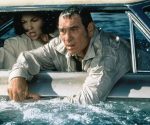
Matt Damon as stranded astronaut Mark Watney in Ridley Scott’s The Martian, based on Weir’s book (Image: Giles Keyte/20th Century Fox)

Author Andy Weir with former Apollo moonlander Buzz Aldrin (Image: Unknown)
“I just love that stuff. I put in about five per cent of what I learn into the book; maybe someone reading for fun doesn’t need a detailed explanation for how quantum tunnelling works.”
In part as a result of its factual accuracy, The Martian quickly became required reading at Nasa and fans include Tesla and SpaceX billionaire Elon Musk, though Weir modestly insists: “I’m sure they enjoyed it, but I’m not going to teach Nasa or SpaceX anything they didn’t know.”
Given the huge success of his debut, it was “frustrating” that the follow-up, Artemis, featuring the first city on the Moon and a young Muslim woman, Jazz, as its heroine, didn’t take off in quite the same way.
“I feel like if I’d made Artemis in a vacuum, people would have maybe been able to enjoy it a bit more,” says Weir, who based Watney and Jazz on aspects of his own personality. “Watney is all of the bits I like with none of my flaws. In Artemis, I wanted to make a flawed character, but I think I went too far and made her so flawed people had a hard time rooting for her. I think I made Jazz an unlikeable character.”
He isn’t making the same mistake with his new hero, Ryland Grace.
“This time my protagonist is a very likeable guy, his flaws are things people can empathise with, he’s scared,” says Weir. “He’s kind of innocent, he’s a bit goody two shoes. We learn he’s a coward more or less, ruled by his fear.”
If Grace is Watney-like, Project Hail Mary is also closer to The Martian than Artemis in theme and tone. But the inspiration for all three came about in a similar manner. “Both of my other books started off with me speculating. Thinking about how we could do a human to Mars mission in the real world led to me coming up with the idea for The Martian,” he says.
With Project Hail Mary, Weir was wondering what the most efficient rocket fuel might be. “Theoretically it would be something that turns matter into light and shines it out of the back of your ship. Light has momentum.When you turn on your torch, it actually has a little bit of kick, not that you’d feel it.”
His musings led him to create a fictional organism he calls “astrophage” – “a thing that eats stars” in Greek – an interstellar lifeform that lives and breeds on the surface of stars by consuming their energy. He explains: “My original plan was astrophage exists and we get hold of it and it’s about the scientific advancements we get from it. And I thought, ‘We’d have to be real careful not to let that get into our sun, that would be disastrous’, and then I was like, ‘Wait a minute, disaster is where stories come from?'”

Gosling plays Ryland Grace, a schoolteacher who goes into space (Image: AP / Amazon MGN Studios)

Gosling’s Ryland Grace is cast into the unknown… and must rely on his wits and intellgience (Image: AP / Amazon MGN Studios)
Thus the new novel, cannibalised in part from an unpublished work, Zhek, begins with Grace waking up with amnesia on board a spacecraft, the Hail Mary, the sole survivor of an interstellar mission to see what humanity can learn from Tau Ceti, a star in another system that appears unaffected by the organism.
Despite being endlessly inventive, Grace will only survive if he can beat his fears. His creator’s engaging optimism extends to real life, even the coronavirus pandemic.
“I would say it’s a huge tragedy but, as a species, our response to it has been pretty impressive. Over the course of basically one year we developed a vaccine. And not just a vaccine but an entirely new technology of vaccine – mRNA vaccines – and those are a game changer. With mRNA vaccines you can hand the lab a virus and it can hand back a vaccine in three weeks.”
In an “insanely optimistic claim” (his words), he says: “I think Covid-19 is going to be the last pandemic in human history, because now we have the technology to stop one in its tracks.”
In recent weeks, needless to say, Weir has been watching with interest as Nasa’s Curiosity rover explores Mars. “It already proved a bunch of stuff I wrote wrong,” he laughs. “For instance, there’s an enormous amount of water ice in the Martian soil so all that stuff Mark Watney did to make water, he wouldn’t have needed to do that.”
Huge success appears to have changed Weir little. With his money from The Martian, he splashed out $10,000 on a genuine Martian meteorite the size of a walnut – one of only a few hundred to have been found on Earth.
“Mars gets hit by meteors and has a thin atmosphere, so sometimes it gets hit so hard it kicks rocks out of Mars’s gravity well and they wander around the solar system for a while and some fall to Earth.”

Project Hail Mary by Andy Weir has been turned into a spectacular Ryan Gosling movie (Image: Cornerstone)
As for humanity’s interstellar ambitions, he isn’t convinced we’ll get to Mars in his lifetime. Nor does he worry about private companies run by billionaires like Musk, Jeff Bezos of Amazon or even Richard Branson being gatekeepers to the stars.
“These people are all ultimately guided by a desire to do a for-profit industry and they’re in competition with each other,” he says. “If a government is the gatekeeper on whether or not you can get to space it becomes political stuff that decides whether or not they’ll let you. If a company is in charge it’s whether or not you can afford the ticket, it’s democratised.”
But would Weir, who famously hates even flying, pay to go into space? “No, no, no? I would not go into space even if it were free.” So what if someone offered him a flight?
He laughs: “I’d say, ‘Thank you, I really appreciate it, and good luck, but no thank you?'”
- Project Hail Mary by Andy Weir (Cornerstone, £9.99) is out now. The film adaptation starring Ryan Gosling is in cinemas from March 19