

Michael Caine starred in the best British gangster movie ever made | Films | Entertainment

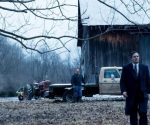
Michael Caine as enforcer Jack Carter in cult film Get Carter (Image: Unknown)
It ranks today as probably the best British gangster film ever made. And yet 55 years ago, when Michael Caine took the ruthless character of Jack Carter from the pages of a book and onto the big screen, nothing could have been further from the truth. Savaged by the critics for its portrayal of excessive violence, Get Carter seemed destined to die the same kind of death as many of the characters featured in its 112-minute attack on the senses. In reality, it was simply ahead of its time.
As Caine – no stranger to the mean streets of post-war, inner-city Britain – once said: “It was too realistic for those people who had become used to the choreographed nonsense you usually saw in those days.” All of which begs the question – how on earth, considering its bleak subject matter and high body count, did Get Carter ever get made in the first place?
On January 28, 1970, a package was delivered to the home of film director Mike Hodges containing a book accompanied by a brief note from the producer Michael Klinger. “Dear Mike, I did enjoy meeting you the other day,” it read.
“I had a chat with Barry who felt you might be interested in reading a book with a view to directing and possibly writing the screenplay.” “Barry” referred to Barry Krost, Hodges’ agent at the time. The book was Jack’s Return Home by Ted Lewis, the story of a London mob enforcer called Jack Carter who travels to the north of England to investigate the mysterious death of his brother – sparking unease among other criminal gangs in the area, who fear his snooping will interfere with their operations.
Hodges read the book and was enthralled. Murder, revenge, corruption, sleaze and betrayal set against a gritty, industrial backdrop. Thirty-two weeks was all it took him to write the script, cast the actors, find a crew, choose the locations, film the scenes and edit the results into the finished article.

Iconic shot of Michael Caine toting a shotgun on the set of Get Carter in 1971 (Image: Getty)
Read more: The real stars of the screen – 10 best English Heritage film and TV locations
Read more: Train drivers nearly halted wartime masterpiece now celebrating 80th anniversary
Along the way, Hodges and Klinger made two decisions that would be crucial to the film’s eventual success. The first was to shoot it in and around Newcastle upon Tyne, completely unrecognisable then from the trendy party mecca it has become. The book had been set in Scunthorpe – equally gritty but without the cinematic locations.
Together, the two men made a tour of the area in Klinger’s somewhat conspicuous white Cadillac, with Hodges adapting his screenplay to accommodate some of the locations they came across.
In effect, Newcastle became one of the film’s co-stars – and not in an altogether positive way. Caine wrote in his autobiography What’s It All About?: “By now I had seen poverty in different parts of the world that had made my own childhood look quite privileged, but I had never witnessed misery like this in my own country.”
The second was the casting of Caine himself. Raised in the tough Elephant and Castle area of south London, he was already a superstar, having appeared in films such as Zulu, Alfie and The Italian Job.
In hindsight, playing Jack Carter – less of an anti-hero and more a ruthless, unfeeling killing machine – could have been career suicide, but Caine didn’t see it that way.
“One of the reasons I wanted to make that picture was my background,” he admitted after its release. “In English movies, gangsters were either stupid or funny. I wanted to show that they’re neither. Gangsters are not stupid, and they’re certainly not very funny.” Later, he went as far as to say that “Carter is the dead-end product of my own environment, my childhood. I know him well. He is the ghost of Michael Caine.”
Hodges, who died in 2022, said 12 years ago: “He [Caine] was key in terms of us getting the film made. His name got us our [financial] backing and gave the character of Carter a certain allure, if you can call it that, which hadn’t been there in the book. It didn’t matter that he was so closely associated with London and we were filming in Newcastle. The character he played, and the way he played it, just drew you in.”

Caine, centre, with Get Carter director Mike Hodges, left (Image: Mirrorpix)
To emphasise the cultural and geographical gap between swinging London and provincial Newcastle, Hodges chose to film the opening title sequences from the front of a train as it sped through the changing landscape between the two cities – the same train conveying Carter on his vengeful mission.
To accompany this, he wanted a piece of music with a sense of foreboding. Which is where the jazz pianist Roy Budd came in. “I shot the title sequence on the way to shoot the film in Newcastle,” said Hodges. “The idea was to put the titles as the [railway] tunnels blacked out the screen.
“This sequence fulfilled another function in that it showed Jack Carter on his way up North having been warned against doing so by his gangster employers. When we showed this to Roy Budd he composed the very effective and exciting theme music to accompany the rhythm of the train. It subsequently became one of the United Kingdom’s most played pieces of film music ever composed.”
That particular piece of music, called Main Theme – Carter Takes a Train, had a sparse, menacing quality that stuck in the mind with all the subtlety of an ice pick. Which is exactly what Hodges wanted, paving the way as it did for the carnage to come.
On February 3, 1971, Get Carter went out into the world, receiving its premiere in Los Angeles prior to going on general release in the UK the following month.
“Like a bottle of neat gin swallowed before breakfast,” was how the musician and critic George Melly described it in his review, and that was one of the kinder ones. It wasn’t that the critics necessarily hated the film, more that they objected to the levels of violence displayed particularly by Carter as he set about eliminating anyone suspected of playing a part in his brother’s demise. However, Britain’s cinema-goers felt differently and voted with their feet – going in droves.

Newcastle became iconic location for Get Carter even though the source book was set in Scunthorpe (Image: Mirrorpix via Getty)
In March 1969, the notorious Kray twins, Ronnie and Reggie, heads of probably the most feared organised crime gang in the UK, had been found guilty after what was, at the time, the longest murder trial in British legal history. The fanfare surrounding both the case and their sentencing was enormous.
“This was the underworld presented as entertainment,” wrote Nick Triplow in his biography of Ted Lewis, who completed the first draft of Jack’s Return Home around the same time as the Krays were sentenced. One newspaper reporter who attended the trial even compared the experience to “sitting right inside a superior thriller”. Just like Caine, large sections of the public were ready for a film that didn’t portray gangsters as stupid or funny.
Released at a time when the rules surrounding film censorship had recently been relaxed – encouraging producers and directors to try their hands at darker material – Get Carter performed well, becoming the sixth most popular movie at the British box office in 1971. Significantly, it has continued to find audiences ever since, as new generations fall under the spell of Jack Carter as played by Michael Caine, stalking the avenues and alleyways of north-east England in a blue mohair suit while supping pints in thin glasses.
Not to mention the character’s immortal lines, such as “You’re a big man, but you’re in bad shape. With me it’s a full-time job. Now behave yourself.” Hodges recalled: “Looking back, I’m very proud of the way it turned out.
“It all came together remarkably quickly which isn’t always a good thing when you’re making something for cinema or television, but on this occasion it turned out to be just that. It’s very of its time and yet it has stood the test of time. It’s probably what I’m best known for, and I’m absolutely fine with that.”

London gangsters Ronnie and Reggie Kray probably influenced Get Carter (Image: Getty)