

Tropical islands are 26C in October – only hours from the UK | Africa | Travel
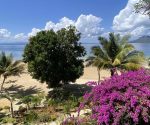
The Cape Verde islands, a volcanic archipelago nestled in the central Atlantic Ocean off the coast of West Africa, are the epitome of idyllic island life. With year-round warm temperatures, sandy beaches, lush mountains and a volcanic landscape, this group of 10 islands is tucked away in the eastern Atlantic, directly opposite the small African nation of Senegal.
Also known as Cabo Verde, the republic basks in glorious weather for most of the year – with temperatures in September, the hottest month, soaring to a scorching 35C. By October, you can still enjoy balmy weather with temperatures ranging between 26 and 28C, peaking at around 30C. Even in the cooler months of January and February, temperatures seldom drop below a pleasant 21C.
Cape Verde gained independence from Portugal in 1975, but the islands’ heritage lives on today through landmarks such as the Monumento de Diogo Gomes – a monument to the Portuguese explorer – and the Presidential Palace, built during the 19th century for the Portuguese governor.
Boasting a culture that’s a vibrant mix of Portuguese and West African influences, the republic has its own unique music and dance, collectively named Morna – which is typically sung in Cape Verdean Creole, a language widely spoken throughout the islands, alongside the official language of Portuguese.
Fogo Island serves as the most striking evidence of the archipelago’s volcanic origins, with fogo translating to “fire” in Portuguese.
The cone-shaped summit of Pico do Fogo rises to 2,829 metres and last erupted in 2015 – though this doesn’t seem to trouble the nearly 36,000 inhabitants. Chã das Caldeiras, a community of roughly 700 people, lies within the volcano’s crater.
Travellers can discover the eerily abandoned Esperadinha Airport, located on the south-westernmost island of Brava. The airport occupies the only flat terrain available, a dangerous position on a narrow headland close to the water’s edge.
The terminal began operations in 1992 but was forced to shut down in 2004 because of the fierce winds that made aircraft landings treacherous. Today, visitors can stroll across the deserted runway and through its crumbling structures.
Two additional disused airports exist across the archipelago – Agostinho Neto Airport in Santo Antão and Mosteiros in Fogo.
Flight times range between five-and-a-half to six hours long, with direct connections from the UK to Sal or Boa Vista chiefly provided by TUI Airways and easyJet from various UK airports like London Gatwick, Birmingham, Manchester, and Bristol.
Those prepared to journey to this remote paradise, however, will be rewarded with sun, sand, fascinating culture and stunning views.